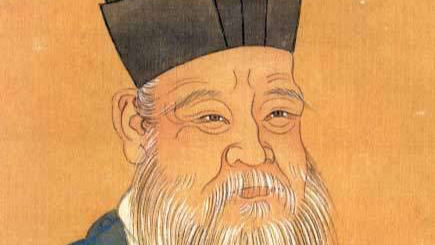
Zhu Xi
Introduction
Zhu Xi (1130-1200) was a prominent Chinese philosopher, educator, and Neo-Confucian scholar during the Southern Song Dynasty (1127-1279). He is widely regarded as one of the most influential thinkers in Chinese history, second only to Confucius. Zhu Xi's philosophies have had a lasting impact on Eastern and Southeast Asian cultures, influencing political and educational systems in countries such as South Korea and Japan, and later reaching Europe and America. His teachings have become an integral part of traditional Chinese thought and continue to be studied worldwide. Zhu's philosophical contributions, particularly his development of the metaphysical theories of li (principle) and qi (vital force), and his emphasis on the "investigation of things" and meditation as a method of self-cultivation, remain relevant in modern discussions of Chinese philosophy.
Early Life
Zhu Xi was born during the Southern Song Dynasty in China's Fujian province. From a young age, he displayed a keen interest in learning and philosophy. His early education was rooted in Confucian teachings, and he was deeply influenced by the classic texts of Confucianism. Zhu Xi's academic journey was marked by rigorous study and a commitment to understanding the underlying principles of Confucian thought. He eventually passed the imperial examination, which allowed him to enter the governmental service. However, his career as a government official was not particularly successful, partly due to his outspoken nature and his commitment to his philosophical ideals. Despite these challenges, Zhu Xi dedicated much of his life to teaching and writing, developing his own interpretations of Confucian philosophy.
Philosophical Contributions
Zhu Xi's philosophical contributions are one of the most significant aspects of his legacy. His work laid the foundation for what became known as Neo-Confucianism, a revival and reinterpretation of Confucian thought that incorporated elements of Daoism and Buddhism. Zhu Xi sought to address the moral and ethical crises of his time by promoting a system of thought that emphasized the importance of self-cultivation and the pursuit of moral integrity.
Neo-Confucianism
Zhu Xi's Neo-Confucianism synthesized Confucian, Daoist, and Buddhist ideas into a cohesive philosophical system. He stressed the importance of li, the underlying principle or order of the universe, and qi, the vital force or energy that flows through all things. For Zhu Xi, understanding the relationship between li and qi was essential for achieving personal and social harmony. His interpretation of Confucianism emphasized moral education and the development of one's character as a means of achieving a virtuous life.
The Four Books
One of Zhu Xi's most enduring contributions to Confucian thought was his compilation and commentary on "The Four Books," which became the core texts of Confucian education. These texts included the Great Learning, the Doctrine of the Mean, the Analects of Confucius, and the Mencius. Zhu Xi's commentaries provided a comprehensive framework for understanding Confucian ethics and philosophy, and they became the basis of civil service examinations in China for centuries. His work on "The Four Books" solidified his position as a central figure in Chinese intellectual history.
The Theory of Li and Qi
Zhu Xi's theory of li and qi articulated a sophisticated metaphysical framework that integrated natural and moral philosophy. Li was seen as the inherent order and rationality present in all things, while qi represented the dynamic and physical manifestation of this order. Zhu Xi argued that through the process of "the investigation of things," individuals could align themselves with the li and cultivate their moral nature. This theory not only influenced later Confucian thinkers but also shaped various aspects of Chinese culture, including politics, art, and science.
Education and Teaching
Zhu Xi was not only a prolific writer but also a dedicated educator. He established several academies, including the renowned White Deer Grotto Academy, which became centers for learning and the dissemination of his philosophical ideas. Zhu Xi believed in the transformative power of education and advocated for a curriculum that emphasized moral and intellectual development. His teachings attracted a large following of students and scholars who helped to perpetuate his ideas. Zhu Xi's educational philosophy stressed the importance of personal integrity, critical thinking, and the pursuit of wisdom. His commitment to education and mentorship left a lasting impact on the intellectual landscape of his time and beyond.
Major Works
Zhu Xi's literary output was extensive, encompassing a wide range of subjects including philosophy, ethics, literature, and politics. His most famous works include his commentaries on "The Four Books," which have been studied by generations of scholars. He also wrote numerous essays, letters, and poems that provide insight into his philosophical insights and personal reflections. Zhu Xi's collected works, recently recompiled in chronological order, offer a comprehensive view of his intellectual contributions and serve as a valuable resource for understanding his thought.
Legacy and Impact
The legacy of Zhu Xi is enduring and multifaceted. His philosophical system left an indelible mark on Chinese intellectual history and shaped the development of Confucianism in East Asia. Zhu Xi's ideas on self-cultivation, moral integrity, and the investigation of things continue to resonate in contemporary discussions of ethics and education. His influence extends beyond philosophy, impacting politics, culture, and even ecological thought. Zhu Xi's teachings have been the subject of scholarly study and debate for centuries, both in China and internationally, reflecting their ongoing relevance and significance.
Criticism and Controversy
Despite his many contributions, Zhu Xi's philosophies were not without controversy. Some contemporaries and later scholars criticized his interpretations of Confucianism as being too rigid or doctrinaire. Others argued that his focus on metaphysical speculation detracted from the practical application of Confucian ethics. In addition, Zhu Xi's political views and involvement in government service sometimes brought him into conflict with other officials and intellectuals. Nonetheless, Zhu Xi's work remains a cornerstone of Chinese philosophical thought, and the debates surrounding his ideas continue to enrich and challenge our understanding of Confucianism and its role in the modern world.








